// S02 — Product / Creative Operations
CQAP
Review once. Decide once. Reuse the decision.
// The brief
Creative review at enterprise scale is where quality is won or lost, and it is almost always run out of inboxes and memory. CQAP is a prototype for the alternative: a structured review that captures the reasoning, not just the verdict.
// The challenge
In a large organisation, the same creative question gets answered again and again. Someone decides how a template should version, or which identity a piece of collateral carries — and that decision lives in an email thread until the person who made it moves on. Reviewers spend their time re-deciding settled questions instead of catching the things that actually matter.
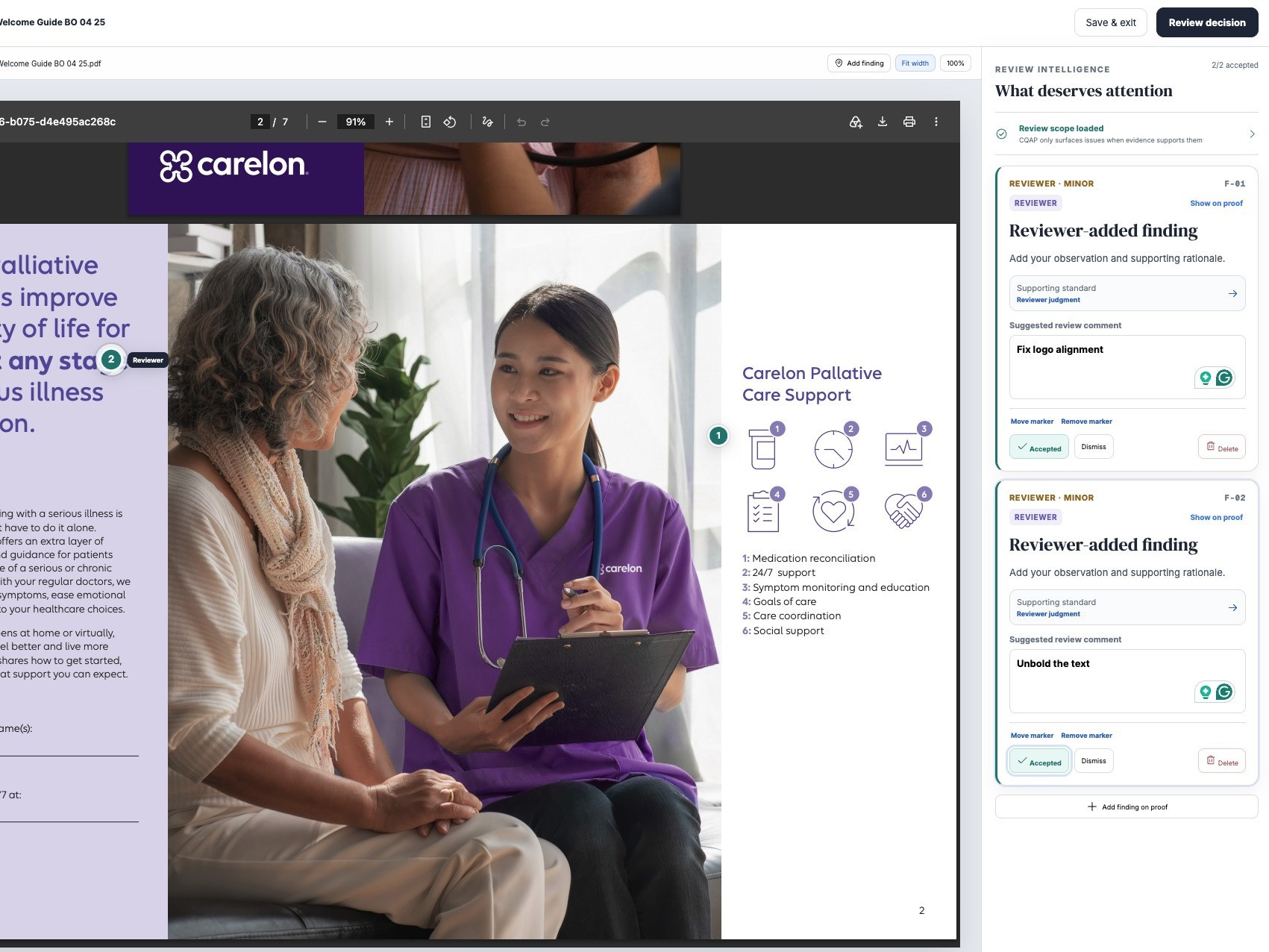
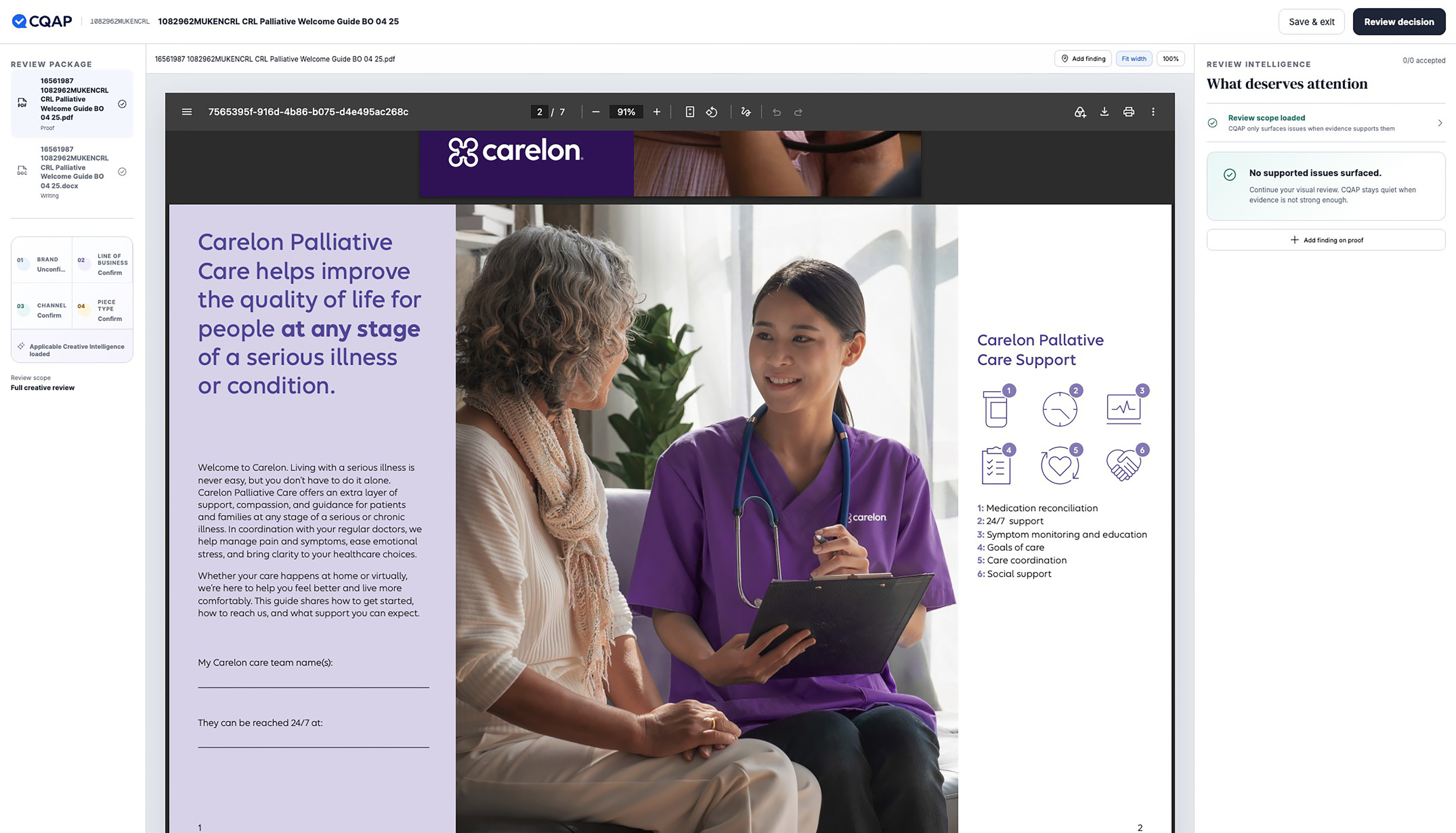
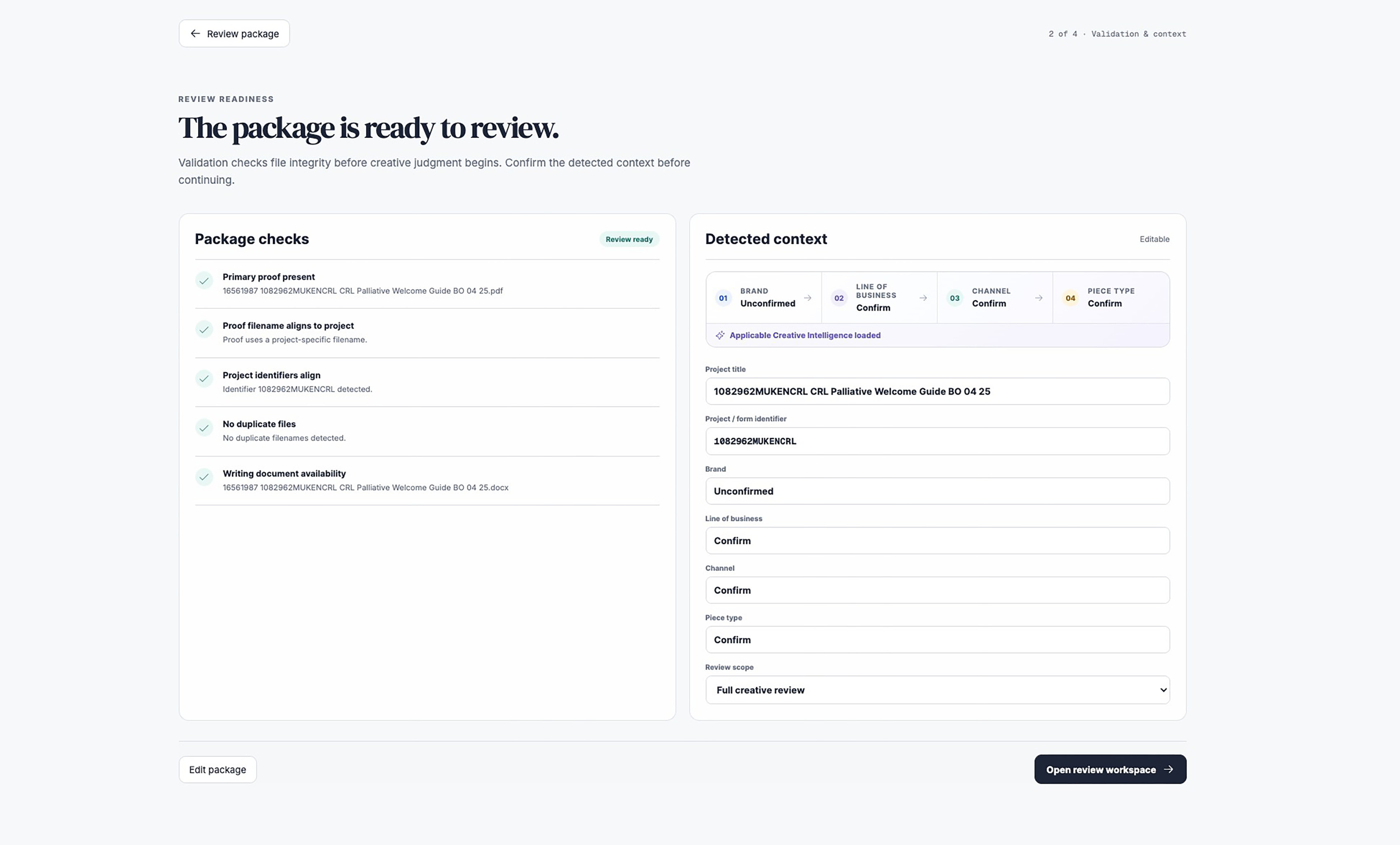
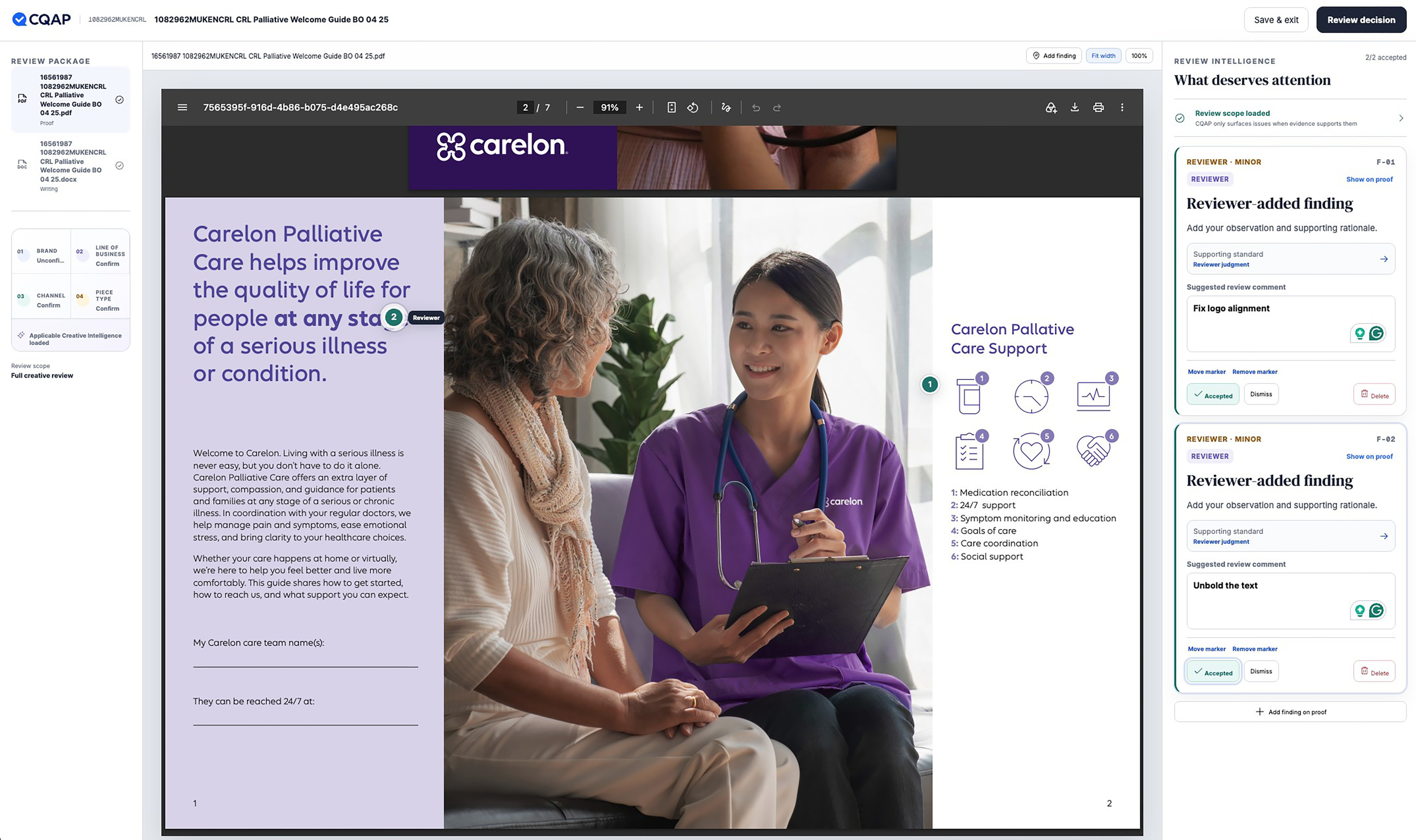
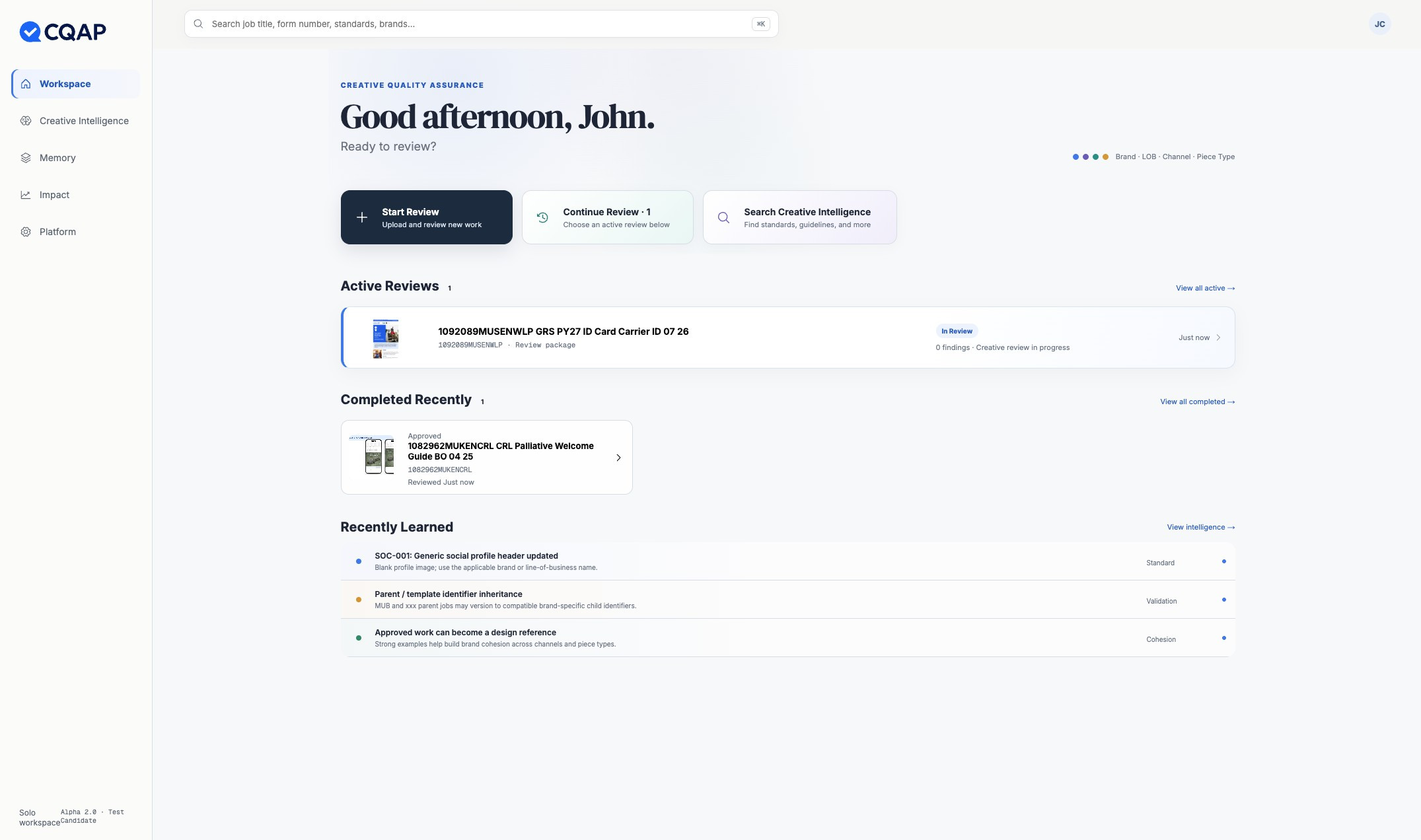
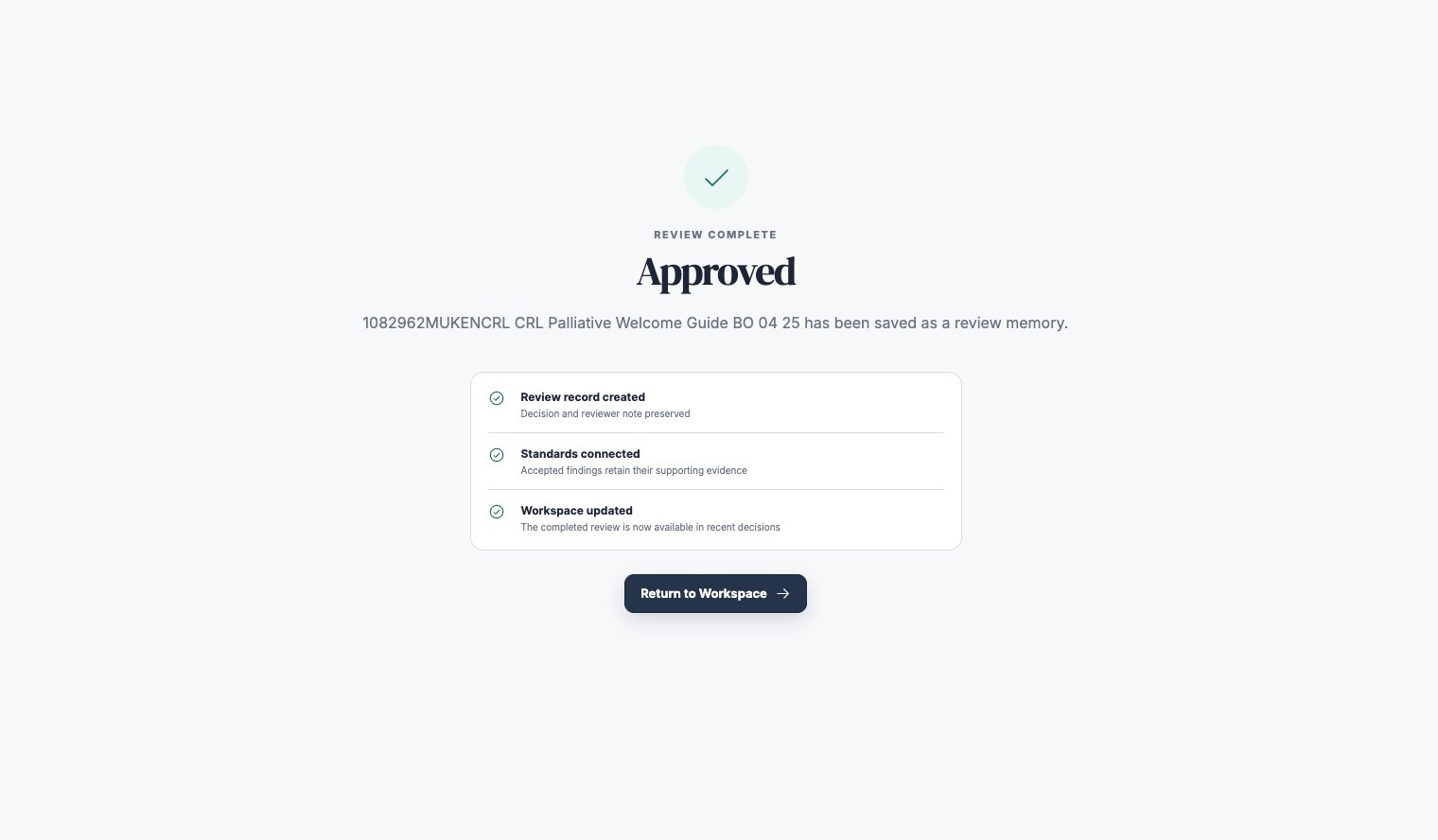
Built on my own time as a prototype, out of years of running creative review at volume. The screens show a real review pass on a real piece — a Carelon Palliative Care welcome guide — from package validation through to an approved decision.
// The work
// The mandate
Prototype a review tool where the reasoning survives the review: classify work on the way in, capture the decision on the way out, and make both searchable.
// John's role
- ↳Framed the problem as institutional memory rather than workflow speed
- ↳Designed the review model — classify on intake, capture the decision on completion
- ↳Designed the workspace, the searchable intelligence layer and the memory view
- ↳Built the prototype in Next.js
- ↳Wrote the product language, including the measurement principle below
The people behind the work
- ↳Self-initiated — concept, design and build by John Carman
// Key decisions
Memory is the product
The obvious version of this tool is a faster approval queue. The useful version is one where a completed review becomes a reusable record — 'Decisions that can be reused' is the actual heading on the memory view, because that is the thing worth building.
Classify on the way in
Work is identified by brand, line of business, channel and piece type before review begins. Most review disagreement is really ambiguity about which standard applies, and this settles it first.
Measure the system, never the reviewer
The Impact view states it in the interface: these metrics describe organisational activity, not individual reviewer productivity. A governance tool that becomes a surveillance tool stops getting honest input, and that has to be a stated principle rather than a good intention.
Approved work becomes reference
Strong examples are promoted into the intelligence layer rather than just being cleared. Governance that only ever says no teaches nothing; showing the best prior answer is how standards actually spread.
// The outcome
- ↳A working Alpha with the full loop in place — package validation, a review workspace with placed findings, a decision that becomes a reusable record
- ↳A stated measurement principle that keeps the tool pointed at the system rather than at people
- ↳TODO: Confirm — no pilot, adoption or outcome data yet; this is a prototype and is presented as one
// Reflection
Building it clarified what I had been doing manually for years. The hard part of creative review was never the reviewing — it was that the reasoning evaporated the moment the job closed, so the same ground got re-covered every quarter. Once memory became the product rather than a feature, most of the other design questions answered themselves.